


Best Time to Start Was Last Year (...and the next best time is now)
If there is one thing I have learned in my years of gardening, it is that the best time to start is last year, and the next best time is right now.
This is a hard time of year for me. By the end of August, all the heat and dryness have added up to cook my brain and fry any ambition I may have started the year with. And then there is little left to do but sit around and sigh and complain. Which makes everyone and everything even more miserable. So what is the antidote? Focused, intentional busyness. It may be a cliche that work cures a multitude of problems, but it is a cliche because it is true.
Next year, I want less brown and more green. Especially in the garden. That has really been my oasis this year: a beautiful spot that feels cooler because there are green growing things in it. But as I said above, I have learned that I can’t wait until spring to start making improvements to the garden. It takes time to amend a garden bed to meet its highest growing potential.
Last fall, we set the first tractor tire planter in place and I started filling it with dirt, straw, and clean out from the nest boxes. This spring and summer it grew the most beautiful crop of peas and carrots, and is now home to a flourishing comfrey plant. If I had left it empty until spring, it would have likely acted more like three large planter pots in which I planted lettuce, beets, and spinach. I have wondered all year why they have performed so poorly, and last night, I found out.
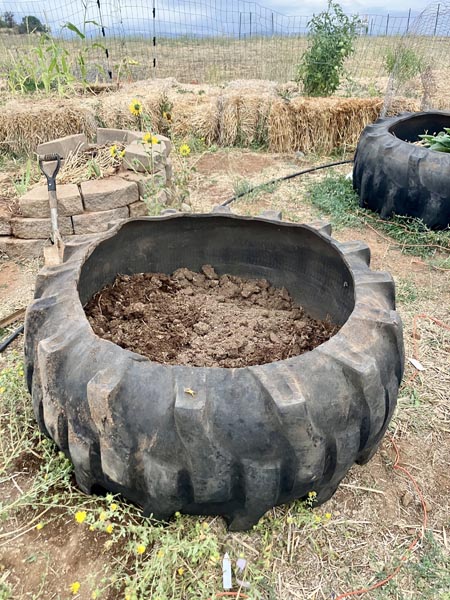
These three pots had not survived an experiment we’d conducted with our livestock and garden water storage system, so we decided to “pull the plug” so to speak on them. Spencer wheeled up our other tractor tire, and we dumped the pots into it. And found three hard-as-concrete pots of soil. No wonder those poor baby plants looked so pitiful all year!
When I filled them this spring, I added manure and straw, but apparently I had not mixed these additions very well with the clay-y soil I added. So even though I watered them faithfully, those poor roots were unable to sink deep into the soil and find the nutrients they needed.
It took a shovel to chisel each soil brick apart, and then we added water and mixed in the preserved manure and straw a little better. Then one of the girls ran down and found the first bit of compost to add: an egg shell from breakfast. That is the plan: we will treat this planter like a compost bin until spring, adding organic matter and stirring it regularly.
This is not the only bed that will receive this treatment. As the plants in each bed reach the end of their season, they will be mulched down and dug into the soil. Then, throughout the winter I will do as I did with the tractor tire planter last winter: add layers of manure from the various animals, bedding straw, and muck from the chicken coop and mix it all together next spring before planting.
I am so excited to see how these amendments will impact next year’s garden! Hopefully, it will be the best one I’ve ever planted!