
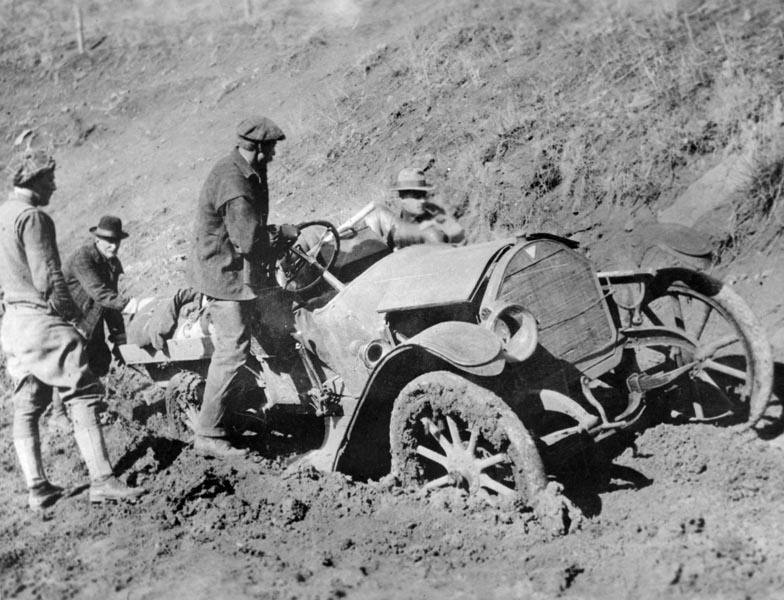
One of the things that makes history interesting is the difference between the past and the present. Something that has always been a factor in human life, both in the past and now, is mud. Mud has had a huge influence on transportation. The condition of roads has always been cause for concern, even today, but not that long ago it was a much, much bigger issue. “Good Road” organizations that advocated for better roads existed everywhere in the U.S., at least through the 1920s. They even held national conventions.
Today, we take for granted that, at least most of the time, our highways will be cleared of snow, and we can make it from one place to another, even if we have to drive slowly or put chains on, etc. That was not true in the past.
The very worst example of a bad road disaster that I’ve ever read about was in the 1880s when W.D. Shaw, Salubria postmaster and mail carrier, had a horse get bogged down right in the middle of the main road where it passed through rich, Salubria Valley farm ground. The watery muck was so deep that the horse drowned before Shaw could get it out.
In 1886 Weiser Postmaster Wm P. Glenn described his experience with the road through Council Valley, saying the mud was axle deep most of the way from Cottonwood creek to Council and “almost a constant mud hole” from there to George Winkler’s place 4 miles north of Council.
In December 1899 the Salubria Citizen newspaper reported that, in one week, the stages between Council and Weiser had tipped over six times because of muddy roads. Stages finally had to stop taking passengers.
M.P. Gifford of Council wrote about the early wagon trail between Weiser and the upper valleys: “In March the roads were in such condition as would mire a saddle blanket. No bridges; no grading; and in the spring no bottom to any of it. Always at about this time of year it became the painful duty of someone to go after a load of freight; and you can imagine about what kind of sport it would be.” Frank Shelton added: “There was no team of four horses in the Council Valley that could pull one ton without getting stuck and requiring assistance to get out of the thousand and one mud holes. ”
To make matters worse, the heavy freight wagons themselves turned parts of roads into a morass of deep ruts. This changed when the P&IN railroad was built and almost all freight moved by rail. In 1904 Ed Jewell had to resort to hauling a load the old-fashioned way and thought himself lucky that he could take a loaded wagon from Weiser to Cambridge in only 7 hours. He mentioned, “The roads are not cut up as they used to be by the heavy freight loads.”
There was little or no road maintenance in general, and even if there was someone the county hired to work on the main roads, little could be done until the mud dried enough. And of course there was no heavy equipment; everything was horse-drawn.
In 1920 the Adams County Leader said three cars had to be abandoned between Council and Midvale because of the mud. The editor said, “The roads have neither top nor bottom.” This was a fairly common expression and referred to roads in spring time, when neither wheels nor sled runners worked very well. There was too much mud and snow for a wagon’s or an automobile’s wheels to roll well, and too much mud and bare ground for a sled to slide well. During the era before even main roads were cleared of snow, the snow was often just packed down by sled traffic. When spring came, that snow became slush in places exposed to sun and remained frozen and hard-packed much longer in shaded spots. And when the snow finally melted, there was just mud.
By 1920 many people had cars, and some main roads had gravel surfaces. Even so, an April 1924 Cambridge newspaper described the road to Portland, saying it was in good condition “except for a few muddy spots on the Blue Mountains.” The editor added: “If going to Seattle, the tourists should go by way of Portland, as the Snoqualmie Pass on the Inland Empire highway is not open and may not be until May 15.”
The March 23, 1928 Leader said the highway between Cambridge and Midvale was impassible. There were reports of people spending the night in their stranded vehicles.
Idaho started experimenting with paving in 1927, putting blacktop on 90 miles of road in the state that summer. By 1930, Highway 95 was being paved in some places. By 1935 it was paved through the Council Valley – almost certainly all the way from Weiser – but the asphalt ended at the Glenn ranch, about a mile north of Fruitvale. Pavement still ends there on the Fruitvale-Glendale Road, which, at the time, was the state highway. In 1940 the present highway route opened over Fort Hall Hill and was paved part of the way to New Meadows.
The highway through Council was paved the same year (1940) but the Leader said that on the side streets, “a good ten to fifteen minutes rain generally makes them so slick that driving a car is dangerous, and a half hour or so of rain about makes them impassable.”
By the fall of 1940, Highway 95 was paved all the way from Weiser to Strawberry (in the canyon south of Tamarack). The last gravel-surfaced stretch of Highway 95, between Tamarack and New Meadows, was finally paved in 1948.
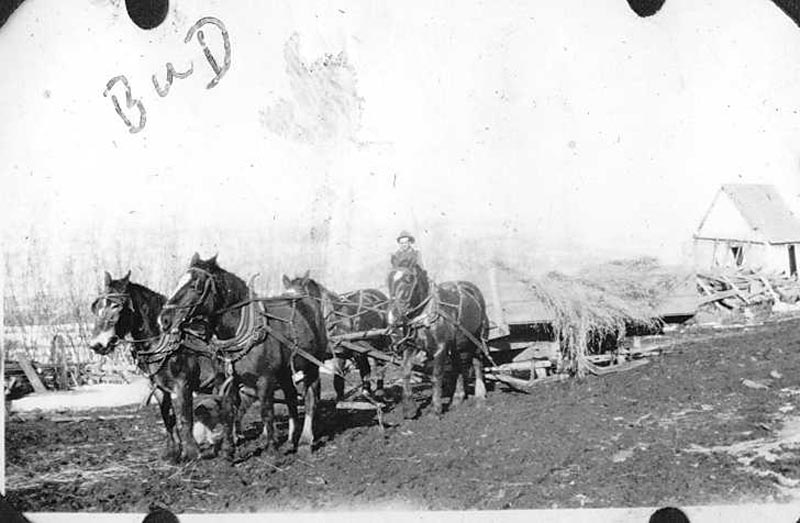
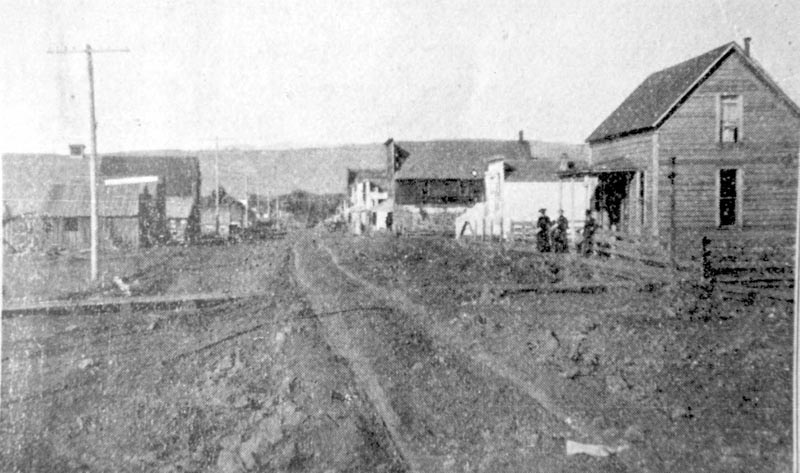
100 years ago
September 10, 1925
“Every house in town is filled. That seems like the good old days.”
“The town is filled with loaded grain wagons every day.”
“The state highway department has announced plans for the construction of two bridges and 4 miles of the North and South highway on the Little Salmon River above the Pollock post office. The new road will be located on the opposite side of the Little Salmon from the present road. This improvement will eliminate the three grades that are now complained of by the tourists.”
“Sheriff Linkous of this County, in company with the Sheriff from Gem County and a federal prohibition officer, nabbed man who must now face prosecution for prohibitory law violation. A 30-gallon still was discovered on the McFadden place in the Crane Creek section occupied by John Dodson.”
75 years ago
September 7, 1950
Married : Doris Jean Hale, daughter of Mr. and Mrs. Taylor Hale, became the bride of Carol Dale, son of Wesley Dale.
The daughter named Linda Marie was born September 2 at the Council hospital to Mr. and Mrs. Leo Toney.
Died: Harriet Thomason, daughter of Marcus and Nancy Jane Sipe. The family came West in 1888, traveling by wagon train.
49 years ago
August 26, 1976
“The 1976 Washington County Fair and Rodeo attracted good crowd despite the fact that rodeos were being held in three other nearby communities. According to rodeos secretary, Victor Craig, total attendance was down only slightly from last year’s record crowds.” 25 years ago
25 years ago
August 31, 2000
Upper Country Locust trees are dying because the locust borer, a beetle that resembles a yellow jacket in coloring, has infected this part of Idaho.
Died: Galen H. York, 66, Council.