
1935 began with the Mesa Orchard Company still mired in the legal process of foreclosure. Adding to the depressing nature of the situation, another evaporator was destroyed by fire in late February.
Adams County Leader, July 5, 1935: “Mr. and Mrs. Gordon Reynolds have arrived and have taken charge of the Mesa Company Store, succeeding Harry Mills, who had been at Mesa since the planting of the first trees.”
The company limped along through another harvest season. As 1936 dawned a judge finally made a decision in February, ordering the immediate sale of Mesa orchards property. It was purchased in April at a public auction by the Western Idaho Production Credit Association. According to the Leader, the price was only $66,050.
Mesa founding father Judah P. Gray died at Nampa in March 1936.
It isn’t clear who managed the orchards during 1936, but sometime in 1937 the management of Mesa was taken over by J.R. Fields. His father (also named J.R. Field for Fields) had been consulting horticulturalist there when the orchards were first started.
In 1938 the major project of rebuilding the flume was undertaken. Clyde Rush supervised the work, which cost the company $63,000.
That March 1938 the orchard company was purchased by F.H. Hogue of Payette.
In 1939 J.B. Daggett moved to Mesa and soon took over management of the orchards. He owned and operated an orchard tract there until 1953.
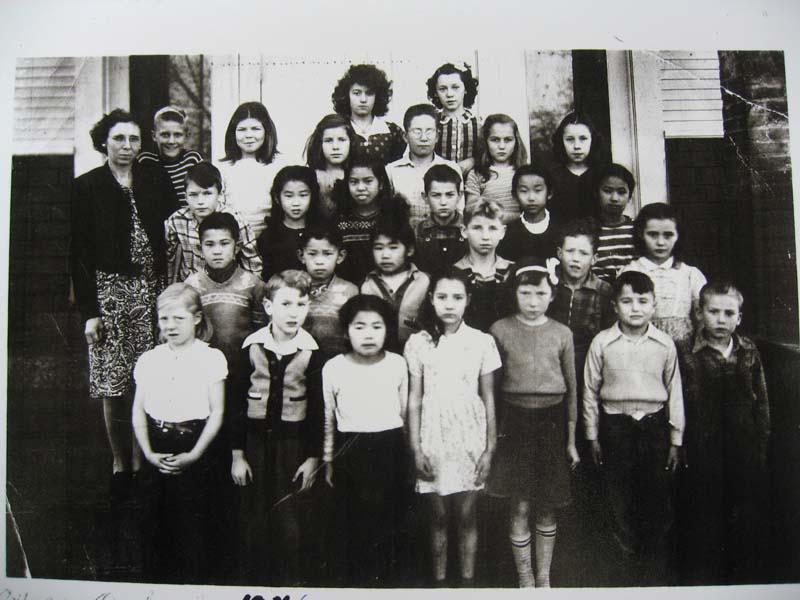
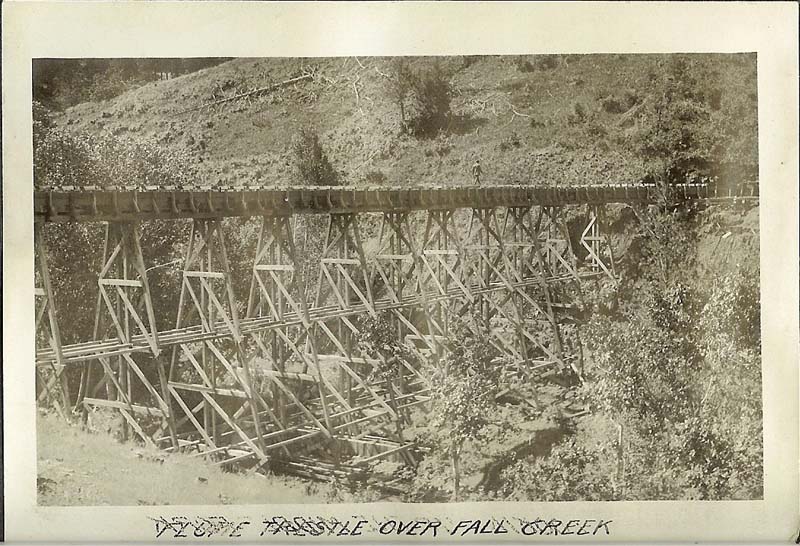
In January of 1940 the Mesa school had an enrollment of 50 students. Late that fall, the tramway was torn down. The Leader said the towers were weak and “the whole structure was deemed by the state highway department to be a menace to safety of highway travelers, the cableway crossing the highway in four different places in its course. With the completion of an oiled road between the packing plant and shipping terminus, the tramway fell into disuse. The last year of operation was in 1934.”
1941 seemed to be a turning point for Mesa Orchards. After struggling through the Depression, apple prices were profitable and continued to be so for the next several years. In March of 1941 Sam and Reba Gentry quit managing the Mesa store and bought the store at Indian Valley.
Of course a major turning point for the world came on December 7 when Japan attacked Pearl Harbor and the U.S. entered WWII. Japanese Americans who lived within a certain distance of the west coast were required to move. Many wound up in detention camps, but those living in places like Ontario, Oregon or Weiser did not have to move.
According to the May 1, 1942 Leader, Mesa orchards was considered as a Japanese detention camp, but rejected as too small. Nevertheless, Mesa did acquire at least one Japanese family during the war. The parents worked in the orchards, and their teenage children attended high school in Council. Prejudice and outright hatred of Japanese people was noticeable in the Council area. There were “No Japs!” signs in some stores in Council.
There was also an uproar in 1942 created by the fact that a group of Japanese Americans from California had considered buying Mesa Orchards.
The Statesman newspaper said Idaho Governor Chase A. Clark had said he feared sabotage and unfriendly treatment of Japanese by Idaho residents. “However, when the proposed sale of Mesa Orchards came to his attention, he protested vigorously, sending protests to General DeWitt and other Army authorities in the western region. The tract had earlier been suggested as a possible location for the housing of aliens under guard, but the governor objected strenuously when it appeared the land might actually be sold to Japanese colonists.
“John Carver. U. S. Attorney in Idaho Falls, on March 14 told a group of farm, business and civic leaders that the Justice Department has determined that enemy aliens may come into Idaho regardless of protests. ‘Aliens must be moved from the Pacific Coast. There are thousands of acres of crops which must be harvested in this area and aliens are a logical solution to the labor problem.
“The American Legion Boise Chapter adopted a resolution opposing sale of Land to Japanese. Again, March 29, the American Legion post commander at Council wrote the Statesman editor that his post had adopted a resolution opposing sale or lease of property in Adams County to Japanese. They would be willing to permit entrance of Japanese for purposes of relocating them only for the present emergency provided they are kept under proper military supervision and that suitable facilities of schools and other civil functions are provided for by the government.
“On March 1 Mary Barnes of Kuna wrote: ‘Just why do we have to have those little yellow slant eyed Jap rats wished on us as beet workers? Don ‘t the little yellow buzzards know enough about our country through here and about our dams, bridges, etc., with out bringing a gang of spies here? Oh, of course they’11 be guarded, and how. But the greasy little worms will crawl out in the night and get information they shouldn’t have. Why hire Mexican workers? The citizens of Boise Valley should rise up and protest, at least. We shouldn’t take it sitting down’.”
Next week: More changes in ownership.
I will be giving a presentation at the New Meadows depot on Tuesday, October 8 at 7:00 p,m.. I will cover Packer John’s Cabin, early Meadows Valley settlers and a few interesting odds and ends.
100 years ago
October 3, 1924
John Kilgore, “manager of the retail store at the Mesa orchards,” left Wednesday to visit his old hometown in New York.
Apple prices are above average this season, “due to a shortage in many of the less favored sections.” At the Mesa orchards, even the culls have value and every precaution is being taken to save all that the trees have produced. “The picking and packing, with the attendant steps between, is on in full blast, and they are running night and day.”
Married September 9: Charlie Gray and Ruby Manning, both of Indian Valley.
Married at Payette: Miss Lois Jeffries of Hog Creek and Ruben Neese of Midvale.
A daughter named Aladeen was born to Mr. and Mrs. Fred Potter September 18.
75 years ago
October 6, 1949
A boy named Dale Robert was born October 1 to Mr. and Mrs. Junior Barton at the Weiser hospital.
Indian Valley – Louise Linder of Indian Valley and Alan Buchanan of Council were married September 18.
Ad: Old-Time and Modern Dance – Saturday, October 8 at the Country Club 2 miles east of Cambridge. Music by the Pine Ridge Ramblers.
49 years ago
October 2, 1975
Midvale: A son named Ryan Gene was born September 26 two Mr. and Mrs. Gene Mallory.
Married at Council: Brenda Barton and Steve Ritter.
25 years ago
Oct. 7, 1999
Died: Wanda Irene Nelson Chapin, 69, of Newport, Oregon. She was born in Midvale in 1929 to May (Batey) Nelson.
Indian Valley: Drew and Jodie Payjak became the parents of a son, Christopher Ryan on September 15.